Subway has over 37,000 locations across 100+ countries. That makes it one of the most accessible job options on the planet for first-timers, students, and career-switchers alike.
The application process looks simple on paper. Drop a resume, answer a few questions, shake a hand. But the reality of landing and keeping a Subway job has some quirks that most guides completely skip.


This is for anyone eyeing their first paycheck, a part-time role during college, or a steady food service job abroad. The franchise model changes things in ways that matter.
How the Franchise Model Changes Your Application (And Why You Should Care)
Subway does not operate as a single employer. Every store is a franchise, owned and managed independently. That means your hiring experience depends heavily on who owns that specific location.
Two Subway stores on the same street can have completely different application processes, wage structures, and interview styles. One manager might hire on the spot. Another might take three weeks to call back.
I think this is the single most important thing to understand before applying, and most job guides treat Subway like a monolithic corporation. Adjust your expectations store by store, not brand by brand.
Walk In or Apply Online?
The short answer: walk in.
Franchise owners respond faster to applicants who physically show up during off-peak hours (mid-morning or mid-afternoon, not the lunch rush). An in-person visit signals availability and initiative in a way that an online form simply does not.
That said, Subway’s official careers page at mysubwaycareer.com does list positions by country and lets you submit applications digitally. Third-party platforms like Indeed also carry regional postings with manager contact details.
My take: apply online and then follow up in person within 48 hours. That combination works better than either method alone.
What the Subway Hiring Process Actually Looks Like
The Application Itself
Subway’s entry-level applications are short. Expect to provide:
- Contact details and availability
- Work history (optional for first-time applicants)
- References from past employers or school, if available
A resume is helpful but rarely required for Sandwich Artist roles. If you have one, bring it. If you do not, do not let that stop you from applying.
The Interview
Interviews run 20 to 30 minutes and happen in-store, usually in a back office or at a quiet table. Questions are predictable:
- Why do you want to work here?
- What hours can you work?
- Do you have food service or customer-facing experience?
Managers are not testing for culinary skill. They want reliability and a friendly attitude. An honest answer about your schedule matters more than an impressive work history.
Dress clean and modestly. No suit required, but presentable clothes signal respect for the process. This applies in the US, Japan, Germany, and Brazil equally.
Background Checks and References
Some locations run background checks. Some do not. This depends on local law and the franchise owner’s policy. It can vary even within the same city.
Clarify this directly with the store before your interview if it matters for your situation. Calling ahead is faster than guessing.
Working at Subway: Job Roles and What to Expect Day One
The Three Roles You’ll Actually Encounter
| Role | Main Responsibility | Who It’s For |
|---|---|---|
| Sandwich Artist | Food prep, serving customers, cleaning | Entry-level applicants |
| Shift Leader / Supervisor | Oversees team, maintains quality | Experienced or promoted employees |
| Store Manager | Scheduling, inventory, hiring | Senior staff or external hires |
Almost everyone starts as a Sandwich Artist. The title sounds a little silly, but the job teaches crowd management, speed, and customer communication faster than most office jobs teach anything.
Promotion timelines vary. Busy locations with high turnover can move someone into a shift leader role within three to four months.
Day-to-Day Reality
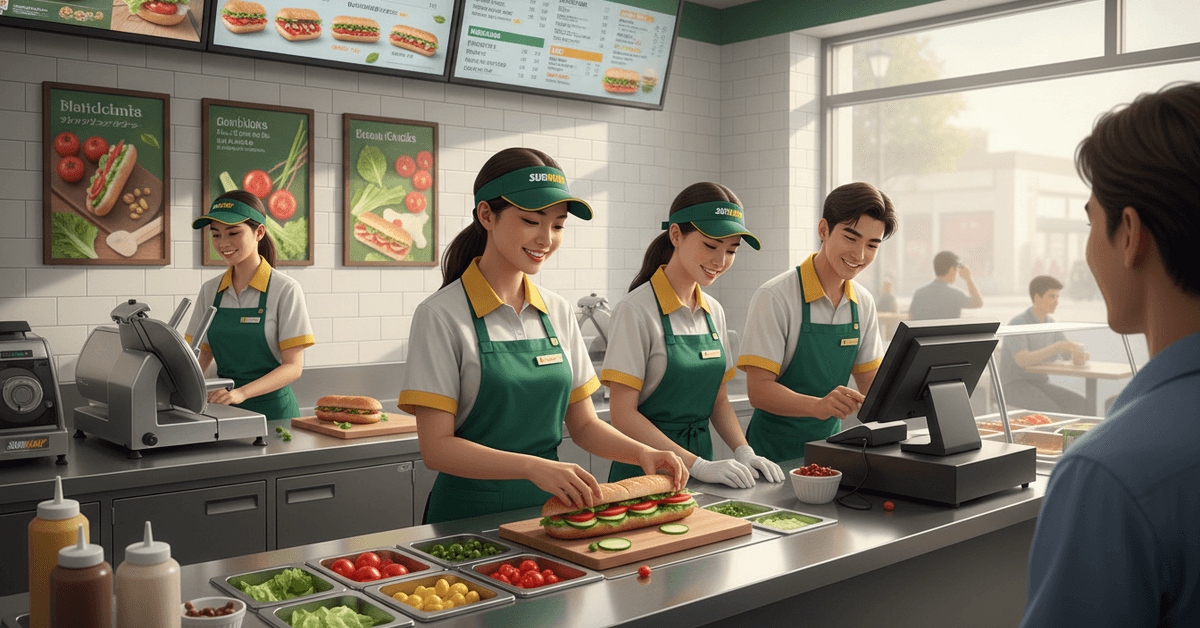
Expect a rotation of food preparation, register operation, restocking, and cleaning. New hires receive basic training in food safety and hygiene protocols before handling anything customer-facing.
The learning curve flattens quickly. Most people feel comfortable with the core routine within two weeks. The surprise comes at peak hours, when the pace accelerates and multitasking becomes non-negotiable.
Wages, Contracts, and What Changes by Country
Pay Rates Around the World
Subway pay is set at the franchise level, within whatever minimum wage the local government mandates. No universal Subway wage exists.
A quick country breakdown:
- United States: Minimum wage varies by state; some states exceed $17/hour as of 2026
- European Union: National minimums apply; Germany and France set floors above the EU baseline
- Japan: Regional minimums apply; late-night shifts typically pay a 25% premium
- Brazil and Portugal: National wage baselines govern entry-level pay
- Middle East and North Africa: Some roles require local sponsorship or a specific work visa
Checking your country’s current minimum wage before negotiating (or even before applying) saves confusion later. The International Labour Organization’s wage database tracks this by country and is updated annually.
Contract Types
Permanent, part-time, and seasonal contracts all appear at Subway locations, depending on the region. Tourist-heavy areas often hire seasonally. Urban stores tend to offer more stable part-time contracts.
I was surprised to find that some European Subway locations offer contracts with benefits tied to national labor law, which is meaningfully different from what you get in markets where franchise employment is more at-will.
Eligibility: Age, Permits, and Language
Who Can Apply
The minimum working age differs by country. Some allow employment from 16, others require 18. Most regions also require proof of legal right to work: citizenship, a work permit, or an active visa.
Language requirements are usually practical rather than formal. Staff in the Philippines, for instance, may work in English and Filipino interchangeably. Staff in Japan are expected to communicate clearly in Japanese for customer-facing roles.
Clarify the specific requirements for your location before applying, especially if you are a non-citizen or studying abroad on a student visa.
Application Tips That Actually Change Outcomes
Franchise owners consistently prioritize two things above all else: open availability and a willingness to learn. Mentioning both directly in your application or interview costs nothing and changes results.
A few specifics worth applying:
- Show up during off-peak hours. Mid-morning (10am to 11am) or mid-afternoon (2pm to 4pm) is when managers have time to talk.
- Ask about the schedule upfront. This signals that you take availability seriously, which is what they actually care about.
- Follow up within a week. One polite in-person or phone follow-up after applying is standard. Two starts to feel like pressure.
I genuinely disagree with the advice to emphasize passion for the food industry in a Subway interview. No one believes it, and managers at franchise locations are too experienced to find it convincing.
A straightforward answer about needing flexible hours and being willing to work hard lands better every time.
Advancement and Benefits
Subway franchise owners promote from within more often than people expect. Punctuality and reliability are the two traits that get noticed fastest in a team of mostly part-time workers.
Beyond promotion potential, most locations offer:
- Meal discounts during or after shifts
- Uniform provision (details vary by franchise)
- Flexible scheduling around school or other work
- Occasional performance bonuses at franchise owner’s discretion
No comprehensive benefits package exists at the entry level for most markets. If healthcare or paid leave matters to your decision, research the specific labor laws in your country before accepting a position.
Questions People Ask About Getting a Subway Job
Q: Do I need food service experience to get hired at Subway? No. Subway hires first-time workers regularly, especially for Sandwich Artist roles. Willingness to learn and open availability matter more than a previous food service job.
Q: How long does the Subway hiring process take? At busy franchise locations, some applicants receive an offer the same day they walk in. At quieter stores or during slower seasons, it can take one to three weeks from application to callback.
Q: Can international students work at Subway? This depends entirely on your visa type and the labor laws of your host country. Many student visas in countries like Australia, Canada, and the UK allow part-time work. Check your visa conditions before applying.
Q: Does Subway do drug tests or background checks? Some locations do, some do not. Franchise owners set their own policies within local legal limits. The safest approach is to ask the specific store manager directly during or before your interview.
Q: Is there a dress code for the Subway job interview? No formal dress code exists. Clean, modest clothes work everywhere. The goal is to look like someone who takes the meeting seriously, not someone dressed for a corporate presentation.
Conclusion
Subway’s application process rewards people who show up, stay flexible, and skip the rehearsed enthusiasm. A realistic attitude about the work gets you further than a polished elevator pitch about loving sandwiches.
The franchise structure means your experience varies wildly by location, so treat each store as its own employer with its own rhythm. If one location is slow to respond, apply to another nearby and let the fastest one win.